Design Rate
Peak window model
Throughput claims include SKU mix, order profile, buffering and exception recovery boundaries—not a single brochure rate.
View design-rate methodWarehouse automation decisions grounded in operating evidence: trailer geometry, restraint interlocks, lift-table duty cycle and acceptance gates translated into reviewable engineering requirements.
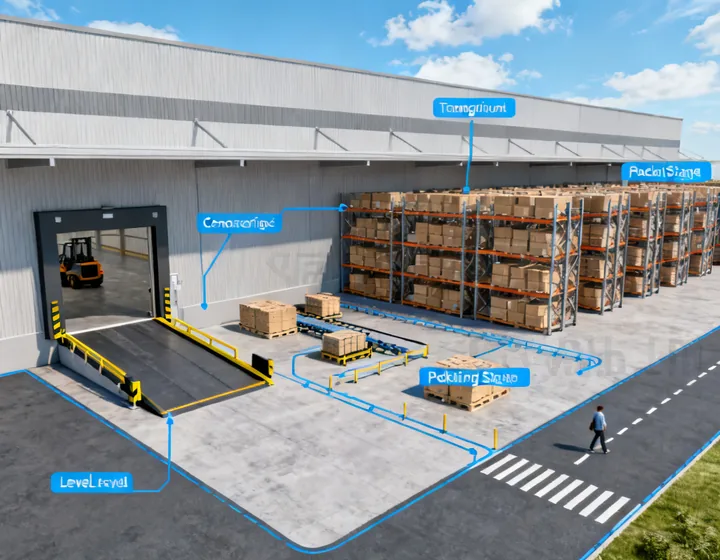
Peak window model
Throughput claims include SKU mix, order profile, buffering and exception recovery boundaries—not a single brochure rate.
View design-rate methodFactory acceptance
Factory checks verify lip travel, restraint engagement proof and control interlocks against the same trailer scenarios used in discovery.
FAT evidence outlineSite acceptance
Site tests confirm pit geometry, floor condition, traffic signals and live cutover fallback before the bay returns to production.
SAT gate checklistLifecycle access
Maintenance access, critical spares and recovery procedures stay visible before operational handover—not after the first unplanned stop.
Discuss service boundaryEvidence links describe methods and document outlines. Project percentages are withheld until trailer mix and test conditions are agreed.
Blue Giant reviews load center, residual capacity and interface responsibility before recommending a hydraulic dock leveler, mechanical package, dock lift or lift table.
Limitation: brochure ratings alone do not prove fit. Floor quality, dock height variance and trailer ICC-bar condition can invalidate a capacity claim that looked complete on paper.
Cards follow Receive, Store, Move, Pick, Sort and Ship—not abstract technology brands—so operations and capital teams can argue from the same map.
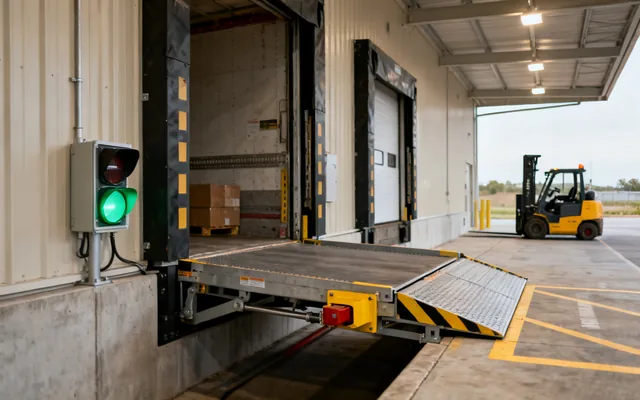
Hydraulic and mechanical dock levelers with restraint and signal packages that only release traffic after engagement proof.
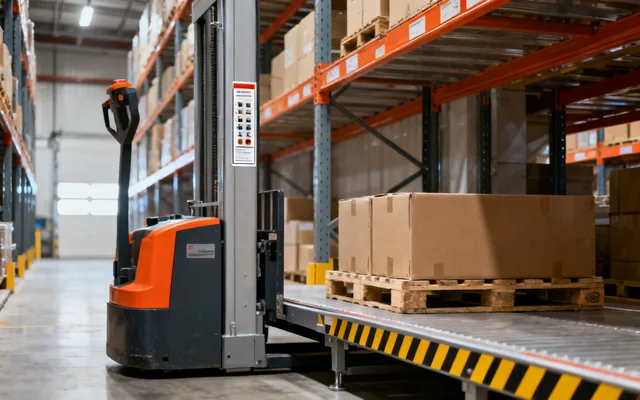
Scissor and freight platforms for buffer staging where selectivity and fire-access aisles must remain intact after density gains.
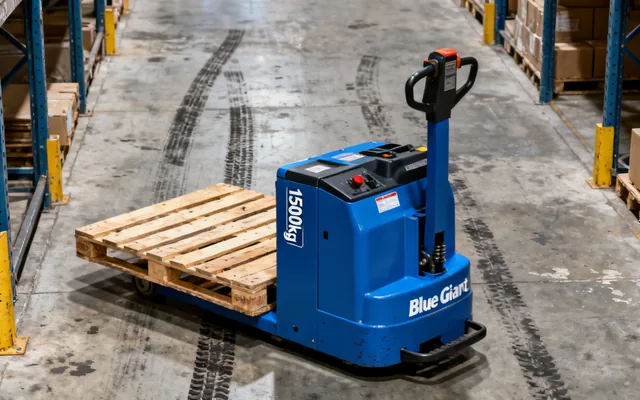
Electric pallet jacks and pallet trucks sized to aisle width, floor condition and residual capacity after attachments.
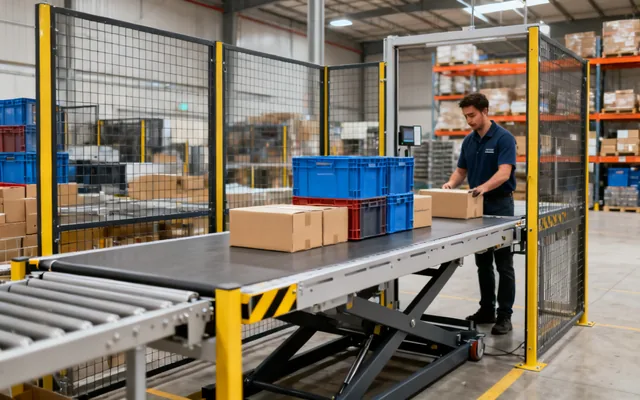
Lift tables that hold pick height steady so order lines per hour claims stay tied to SKU velocity and replenishment timing.
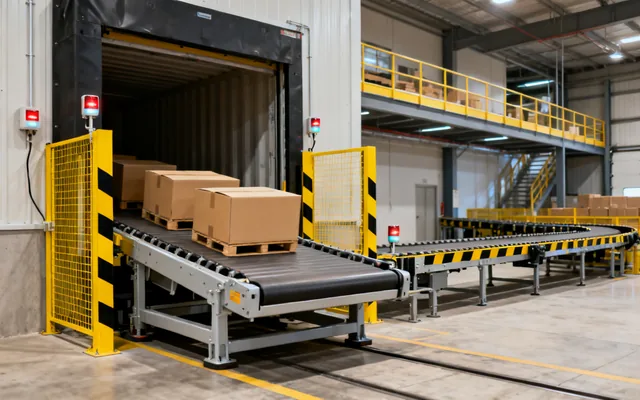
Loading lifts that hand off to conveyors or staging lanes when divert accuracy and buffer occupancy matter more than door count.
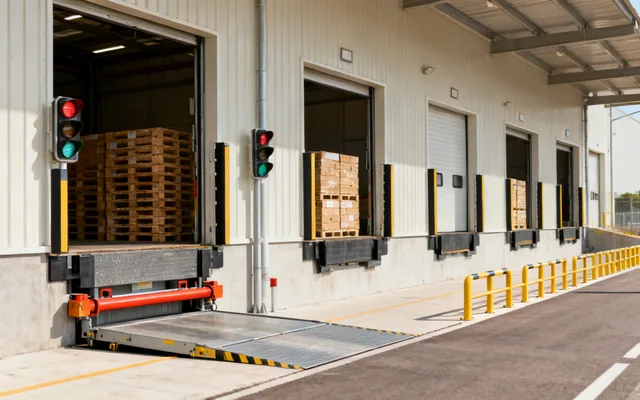
Outbound levelers, restraints and door/seal packages sequenced for dispatch windows and door-open time in chilled or ambient docks.
Dock levelers and restraints with interlock proof before traffic release.
Lift tables for staging without collapsing fire and maintenance aisles.
Pallet jacks sized to aisle width, floor quality and residual capacity.
Pick-height platforms tied to SKU velocity and replenishment timing.
Dock lifts feeding sortation with buffer occupancy visibility.
Outbound packages sequenced for dispatch and door-open limits.
Compare SKU depth, peak factor, temperature and pallet/tote mix before locking leveler capacity or restraint logic for Blue Giant equipment.
| Vertical | SKU depth | Peak factor | Temperature | Pallet / tote mix |
|---|---|---|---|---|
| E-commerce | Deep assortment, small orders | Short cutoff waves | Ambient to mild chill | Cartons, totes, mixed pallets |
| Grocery | Store-sequenced replenishment | Dispatch windows | Multi-temp zones | Pallets, roll cages, totes |
| Cold chain | Velocity by temperature class | Door-open time critical | Frozen / chilled | Pallets with condensation risk |
| Manufacturing | Work-order linked outbound | Stable cadence, high consequence | Mostly ambient | Pallets, returnables |
| 3PL warehouse ops | Multi-client SKU profiles | Client-specific peaks | Shared dock zones | Highly mixed load units |
Deep SKU depth, short cutoff waves, mixed cartons and pallets at ambient to mild chill docks.
Store-sequenced replenishment, dispatch windows and multi-temp dock seals.
Door-open time dominates; condensation and trailer bed variance drive leveler lip choice.
Stable cadence with high consequence if a ship bay fails during a work-order wave.
Client-specific peaks share dock zones; mixed load units stress restraint geometry.
Throughput, density, interfaces and acceptance criteria only become useful when load unit, order profile, peak rate, control boundaries and site constraints arrive together.