Application review
Load center, aisle width, floor condition and residual capacity are scored before a Blue Giant dock leveler or lift table is proposed.
From discovery through FAT/SAT, Blue Giant teams translate trailer mix, pit geometry and control ownership into commissioning windows that protect live shipping bays.

Load center, aisle width, floor condition and residual capacity are scored before a Blue Giant dock leveler or lift table is proposed.
Leveler, restraint, door and signal states share one sequence so a green light cannot appear without engagement proof.
Staging plans define fallback bays, temporary barriers and night windows so peak dispatch continues during modernization.
Pit access, diagnostics, critical spares and recovery procedures are listed before handover—not after the first unplanned stop.
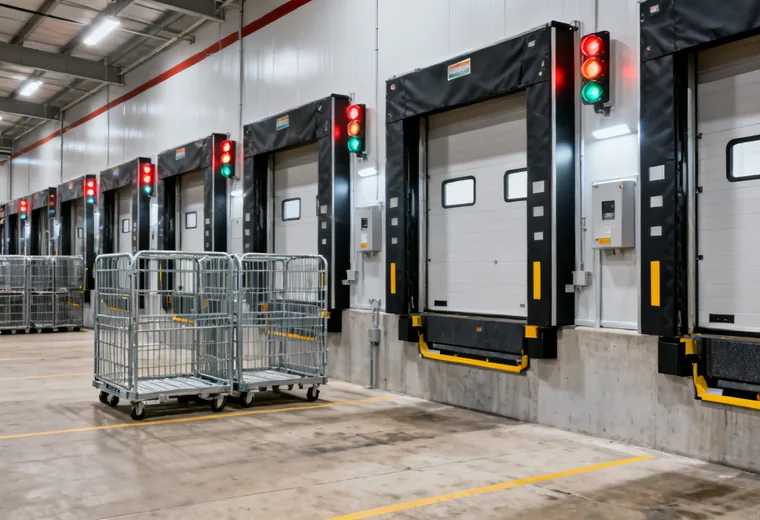
A regional grocery DC needed hydraulic dock levelers and seals across chilled and ambient bays while store-sequenced replenishment continued. Blue Giant staged cutover by temperature class, documented door-open time limits and ran SAT only after restraint proof matched the discovery trailer mix. Peak factor stayed tied to dispatch windows rather than a single theoretical dock rate.
Limitation disclosed: condensation on trailer beds still required lip selection review; capacity claims were not published as universal ratings.
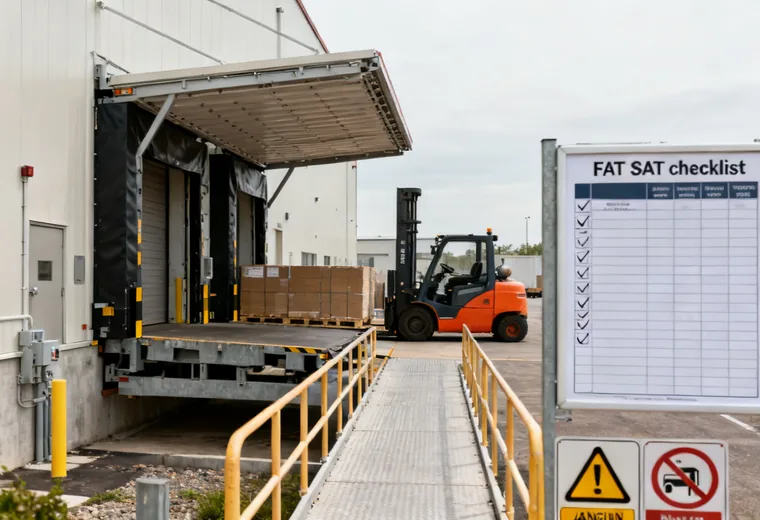
A work-order-linked outbound dock failed intermittently when trailer bed heights varied. Blue Giant rebuilt the interlock matrix, added a dock lift for nonstandard trailers and defined a recovery scenario with a fallback bay. FAT covered lip travel and restraint engagement; SAT confirmed PLC ownership boundaries with the plant controls team.
Limitation disclosed: residual capacity after attachments still depends on floor condition measured at site, not factory slab assumptions.
Framework counts describe method structure. Planning-range brand credentials are not presented as certified project outcomes.
Bring trailer mix, peak window, interface owners and cutover constraints. We return a scoped evidence plan—not a generic brochure pack.